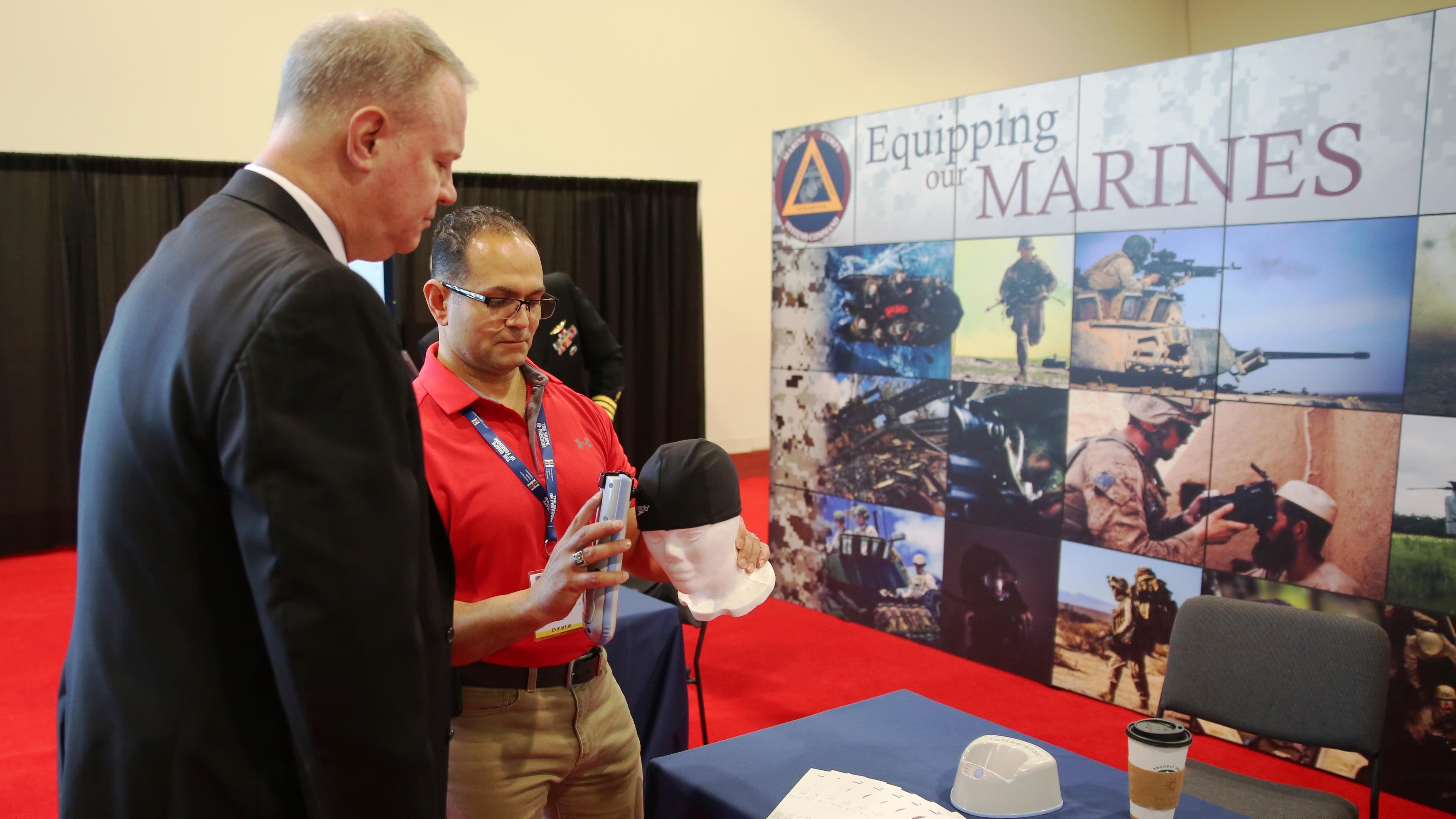
Marine Corps Systems Command is bringing a portable scanner to front line Marines, one that can quickly catch brain bleeding and potentially save lives, said the U.S. Marine Corps.
The Infrascanner can detect intracranial hematomas early on, meaning it can tell if there is bleeding in the skull. And it can even be used on the battlefield. Current remote facilities do not have the capability for such immediate diagnosis.
When Marines encounter close proximity blasts or fall and hit their heads, they become susceptible to traumatic brain injuries and bleeding.
"Intracranial hematomas — if gone untreated — can put pressure on the brain, causing potential brain damage or even death," Mark Urrutic, project officer for the Family of Field Medical Equipment Team at MCSC and a retired Navy chief hospital corpsman, said in a Marine Corps release.
Traumatic brain injuries can be treated, but success often relies on a timely diagnosis, and sometimes just finding that diagnosis takes a lot of resources.
Before the new medical device, medical personnel gauged severity through symptoms and a Military Acute Concussion Evaluation, or for a more definitive answer, a CT scan.
"This isn't going to replace the CT scan," said John Philpott, a medical team engineer at MCSC. "In addition to helping us determine if Marines have suffered brain injuries, it can help us rule out Marines who haven't. So, Marines who aren't suffering from a brain hematoma can get back to the action sooner, rather than having to send every Marine back for a CT scan, which uses time and resources."