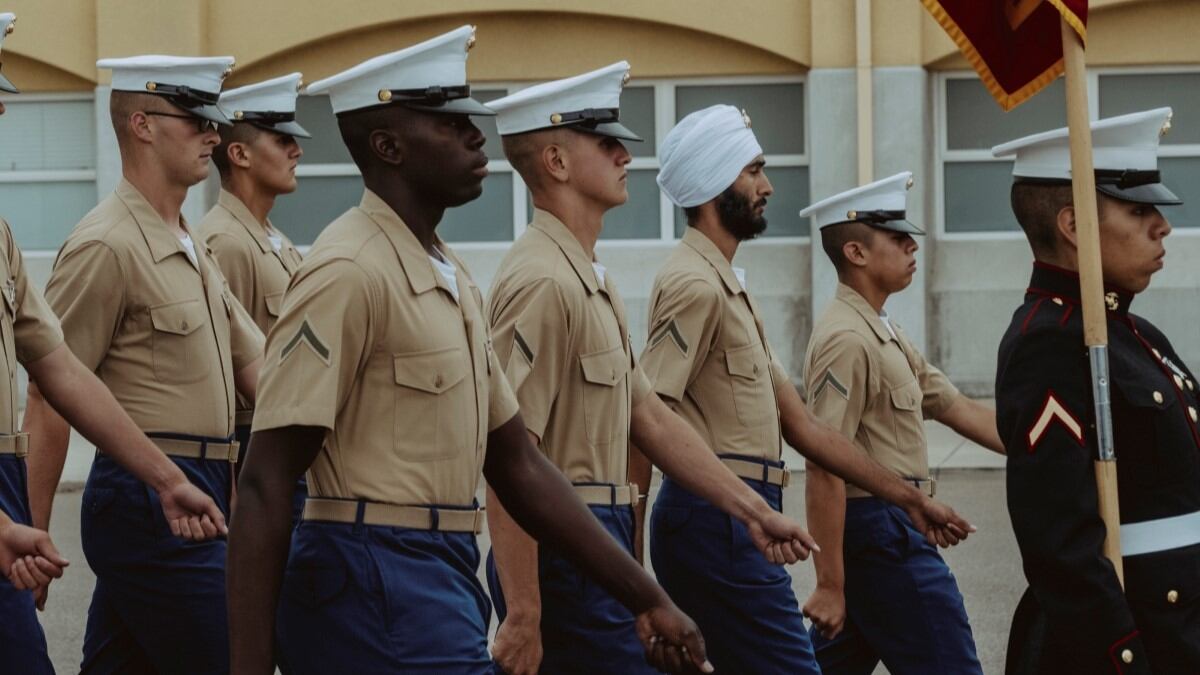
The Marine Corps issued interim guidance this week for accommodating religious beliefs involving uniform, grooming and vaccination standards, as well as dietary practices and religious holidays.
According to Wednesday’s announcement, Marines seeking such accommodations must submit a written request to their command, which will assess the sincerity of the religious belief and the request’s potential impact on mission readiness.
The guidance comes amid the Defense Department’s ongoing effort to narrow the list of recognized religions and limit permissions for facial hair in the name of mission readiness, while also loosening vaccination requirements to honor individual freedoms.
Under the new guidance, a Marine’s written request must explain how the religious belief conflicts with a service policy or regulation, or how the policy conflicts with the belief.
“Supporting information or evidence that demonstrates the religious belief is sincerely held, which may include, but is not limited to, personal testimony, participation in religious observances, or corroborating statements from religious leaders or community members,” the guidance says.
The Marine must also sign a sworn statement affirming the validity of the information provided and acknowledging that false statements could result in disciplinary action under the Uniform Code of Military Justice, or UCMJ.
Before approving an accommodation, commanders must determine whether the request is based on a sincerely held religious belief and whether granting it would affect mission requirements.
To assess sincerity, commanders should consider “contextual factors” that could indicate whether a request is based on religious belief rather than personal preference or convenience. Those factors include “circumstances existing at the time of the request, contradictory or inconsistent statements and conduct,” the guidance says.
Commanders must also determine whether an accommodation would interfere with a Marine’s ability to operate in specific environments or hazards or wear required protective equipment. The guidance specifically lists “helmets, masks, and respirators” as examples.
Commands generally have 30 to 60 days to respond to an accommodation request. Until a request is approved in writing by the appropriate adjudication authority, the Marine must “continue to comply with the policy, practice, or duty from which an accommodation has been requested.”
Daniel Terrill is a contributor to Military Times. He’s been reporting on military issues, the gun industry, and the outdoors for nearly two decades. Although writing is his passion, he’s been a Marine, police officer, and, perhaps the most dangerous job of his career, a substitute teacher.