Seasoned corporals and sergeants in combat arms fields have a shot at being part of a new squad leader program that comes with its own military occupational specialty MOS, a chance at faster promotions, and sizeable re-up bonuses for those who make the cut.
In a Marine administrative message published Wednesday night, officials with Plans, Policies and Operations revealed full details about the new 0365 MOS. It was a military occupational specialty designed to remedy the Corps’ shortage of quality noncommissioned officers as infantry squad leaders and to create a promising career path for those in the field.
The program is starting on a small scale, with slots for 100 Marines who come recommended by infantry battalion commanders. Corporals and sergeants in just five MOSs — infantryman, machine gunner, mortarman, infantry assaultman and anti-tank missileman — are eligible to apply. Only troops with between three and six years of time in service are eligible, although corporals with just two years of service can apply for a waiver.
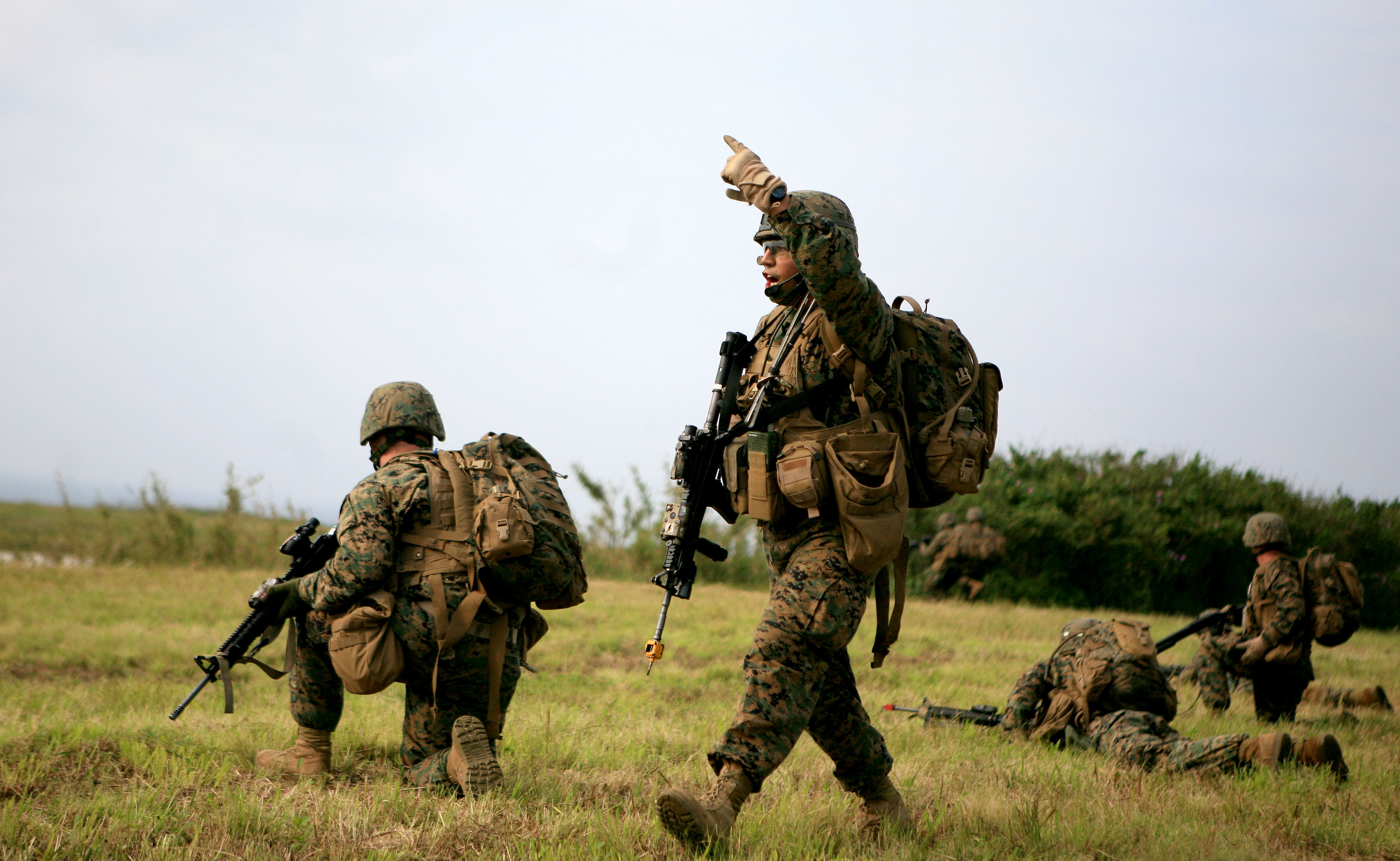
Cpl. Nicholas Escobedo, a squad leader with 2nd Battalion, 7th Marines, signals Marines to move forward during an airfield seizure exercise. Corporals who are selected for the Corps’ new squad leader development program will be promoted to sergeant.
Photo Credit: Marine Corps
For corporals picked for the program SLDP, there is especially good news: sSelection comes with to the program is good for an automatic promotion to sergeant.
For Marine applicants in both ranks, there is also the promise of substantial bonus cash. The program requires Marines to commit to serve an additional 48 months after selection. For first-term Marines who have not re-enlisted in this fiscal year, the 0365 MOS comes with a selective re-enlistment bonus of $18,500 for corporals and $20,500 for sergeants.
Qualified applicants must have completed professional military education requirements for the rank of corporal, along with either the advanced course in their relevant MOS or the scout sniper basic course.
The squad leader development program plan is backed by Commandant Gen. Joseph Dunford’s planning guidance, released earlier this year, which said the shortfall of NCOs and Sstaff NCOs in key leadership positions was on track to degrade the Marine Corps’ readiness and combat effectiveness.
“Our objective is to address the gaps for NCOs and SNCOs by grade, MOS, and qualifications in the structure that we man across the Marine Corps,” Dunford he wrote in the guidance. “In order to address these challenges, we will fully implement programs like the Squad Leader Development Program and consider other innovative ways to enhance the quantity and maturity of leadership at the small unit level.”
Two career paths
Once selected to the program, there are two tracks available to Marines:
- The operational force track. These in which Marines will be placed directly at infantry squads following required training.
- and tThe combat instructor track. This option , which will will allow program participants to complete a special duty assignment tour as a combat instructor before completing their operational tour as a squad leader.
Ultimately, the MARADMIN says, the final track assignments of participants will be based on the needs of the Marine Corps.
Once in the program, Marines will complete both the sergeants’ course and the infantry small unit leaders’ course before placement with a squad, which may not be attached to their original unit. Troops in the combat instructor SDA track will also complete combat instructor school before departing for their special duty assignment.
In addition to a guaranteed squad leader slot, NCOs in new 0365 MOS can look forward to attaining the 0369 infantry unit leader MOS upon promotion to staff sergeant. There is also the promise of additional operational experience, as squad leaders in the program will be placed in an infantry unit with between a year and six months until its next deployment.
An additional MARADMIN will be published with application deadlines and a clear process for submitting the application, officials said. Qualifying NCOs will submit their applications to their division commanding general through their relevant chain of command.
While the program remains exclusive this year, officials said a new MARADMIN will be published each year with new program quotas. Ultimately, Marine leaders plan to include all infantry squad leaders in the program.
According to the MARADMIN, the end goal is “to develop a concept which produces a better trained, educated and matured squad leader to enhance Marine infantry battalions’ capabilities in order to provide a force more capable of operating in complex, distributed environments … the end state is for every infantry battalion to have a core of mature, trained and educated sergeant infantry squad leaders to lead and guide their units through their deployment cycle.”