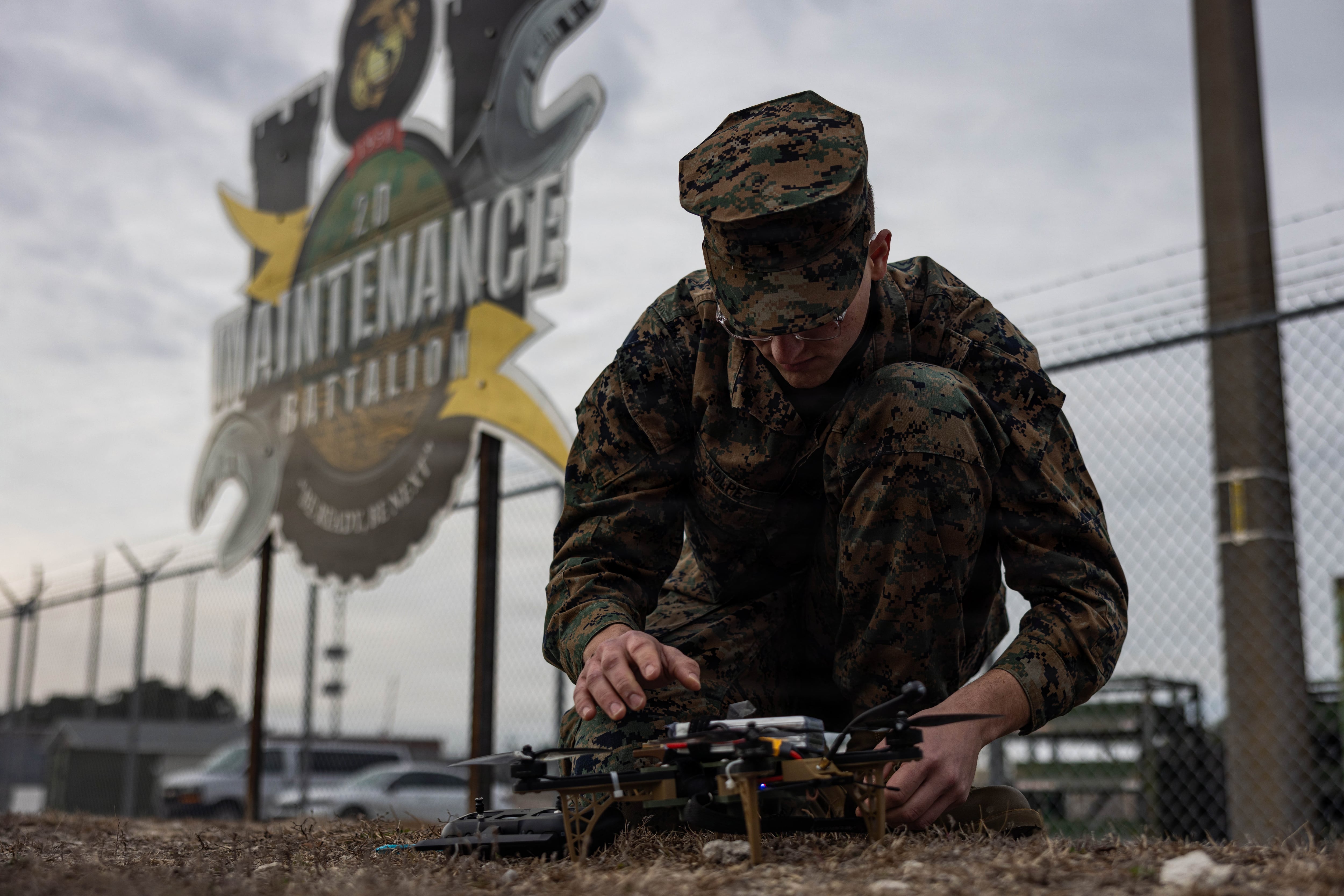
The U.S. Marine Corps has pioneered a 3D-printed first-person view drone that is easy to assemble, ready for field use and conforms to national security standards.
Sgt. Henry David Volpe, an automotive technician with the 2nd Marine Logistics Group, used his interest in engineering and robotics to help develop HANX, the Marine Corps’ first unmanned aircraft system built from 3D-printed parts to be approved by the National Defense Authorization Act, service officials announced last month.
Fortunately, for both the Marines and for Volpe, he found an outlet for his passion for robotics when he was assigned to the II Marine Expeditionary Force Innovation Campus at Camp Lejeune, North Carolina.
“I immediately went over to the innovation campus, shook hands with the master sergeant, and said, ‘I want to work over here, I’ve got experience with this,’” Volpe said, according to a Jan. 28 release.
The result was HANX, which derives its name from Volpe’s nickname “Hank.” The drone, approved for use by U.S. Naval Air Systems Command, features a simple and low-cost design that is easy for Marines to assemble using 3D-printing technology.
Further, HANX is NDAA compliant, meaning it’s not assembled from unapproved parts from foreign manufacturers that could contain security vulnerabilities. Previous Marine drones assembled using 3D printing were not subject to the same NDAA security requirements that exist today. The HANX drone is the first of its type to be approved by both NAVAIR and meet current NDAA requirements.
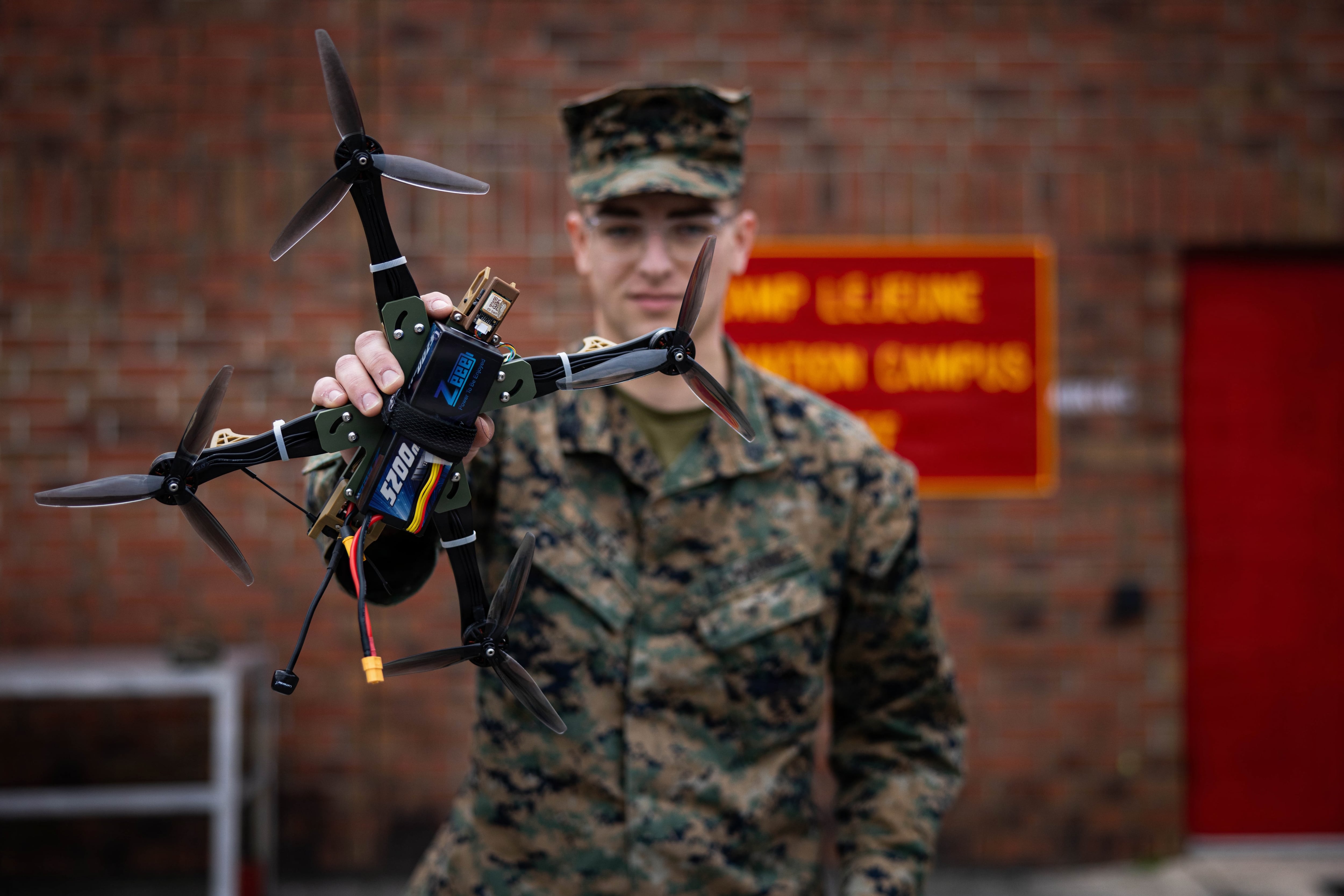
As an FPV drone, HANX can be modified for use as a flying explosive, reconnaissance tool or logistics delivery node.
“The drone is cheap and easy to change, making it easier to be utilized for a variety of missions throughout the military, compared to all of the drones bought through contractors where we aren’t allowed to modify them,” Volpe said.
Building HANX entailed over a thousand hours in the innovation lab and navigating government bureaucracy for approval, but the result is a drone that is secure, field-ready and designed by Marines for Marines, according to the release.
“This was only possible because of the collaboration with the team around me,” Volpe said. “I’d give out different drone parts and say, ‘Hey, can you redesign this for me?’ Or ‘I need 20 of these printed.’ I designed it, but I didn’t work on it alone.”
The Marine Innovation Campus has since developed a plan for in-house production of HANX, plus the framework for field training and curriculum.
Zita Ballinger Fletcher previously served as editor of Military History Quarterly and Vietnam magazines and as the historian of the U.S. Drug Enforcement Administration. She holds an M.A. with distinction in military history.