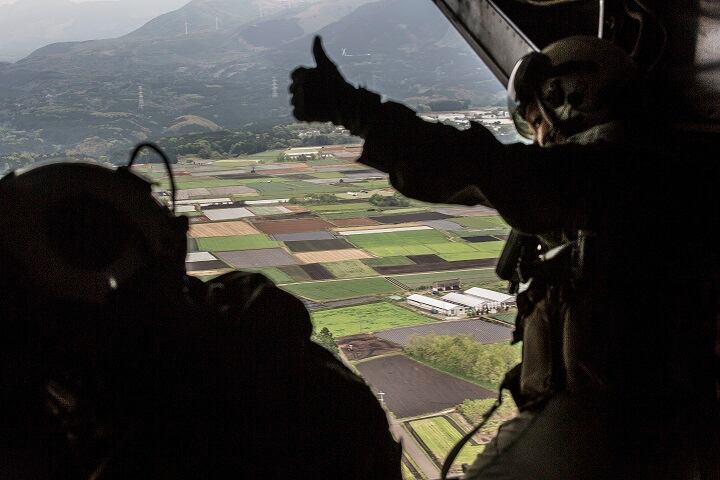
The U.S. has doubled the number of Marine MV-22B Ospreys involved with earthquake relief efforts in Japan and added two Air Force C-130H Hercules to help ferry supplies to those in need, officials said on Monday.
On Monday, two Ospreys delivered four loads of supplies to a sports park including blankets, toiletries, food and water, according to the 31st Marine Expeditionary Unit. About 120 Marines are involved in the relief mission.
"We understand that the necessity of speed is critical in a situation like this so we placed our forces in the best position to provide support as needed," Col. Romin Dasmalchi, commander of the 31st MEU, said in a news release.
Southern Japan has been hit by two earthquakes that were separated by barely 24 hours: A magnitude 6.2 quake on April 14 and a stronger aftershock of magnitude 7.0 on April 16. The quakes have reportedly killed at least 40, injured hundreds more and may have left people trapped in rubble.
"The Japanese government is more than capable of providing relief, but we don't want to miss an opportunity to provide support if needed to the Japanese citizens affected by the earthquake," Dasmalchi said in the news release.
A total of eight MV-22Bs have arrived at Marine Corps Air Station Iwakuni, Japan, to allow the 31st MEU to deliver supplies to the areas hit hardest by the earthquakes, the news release says. The first four Ospreys landed at Iwakuni on Sunday after flying from the Philippines and the rest landed on Monday.
Dasmalchi said that the Ospreys are ideally suited for the mission because they tiltrotor aircraft that takes off like a helicopter and flies like a plane can land anywhere to deliver supplies and they do not need a runway in order to take off.
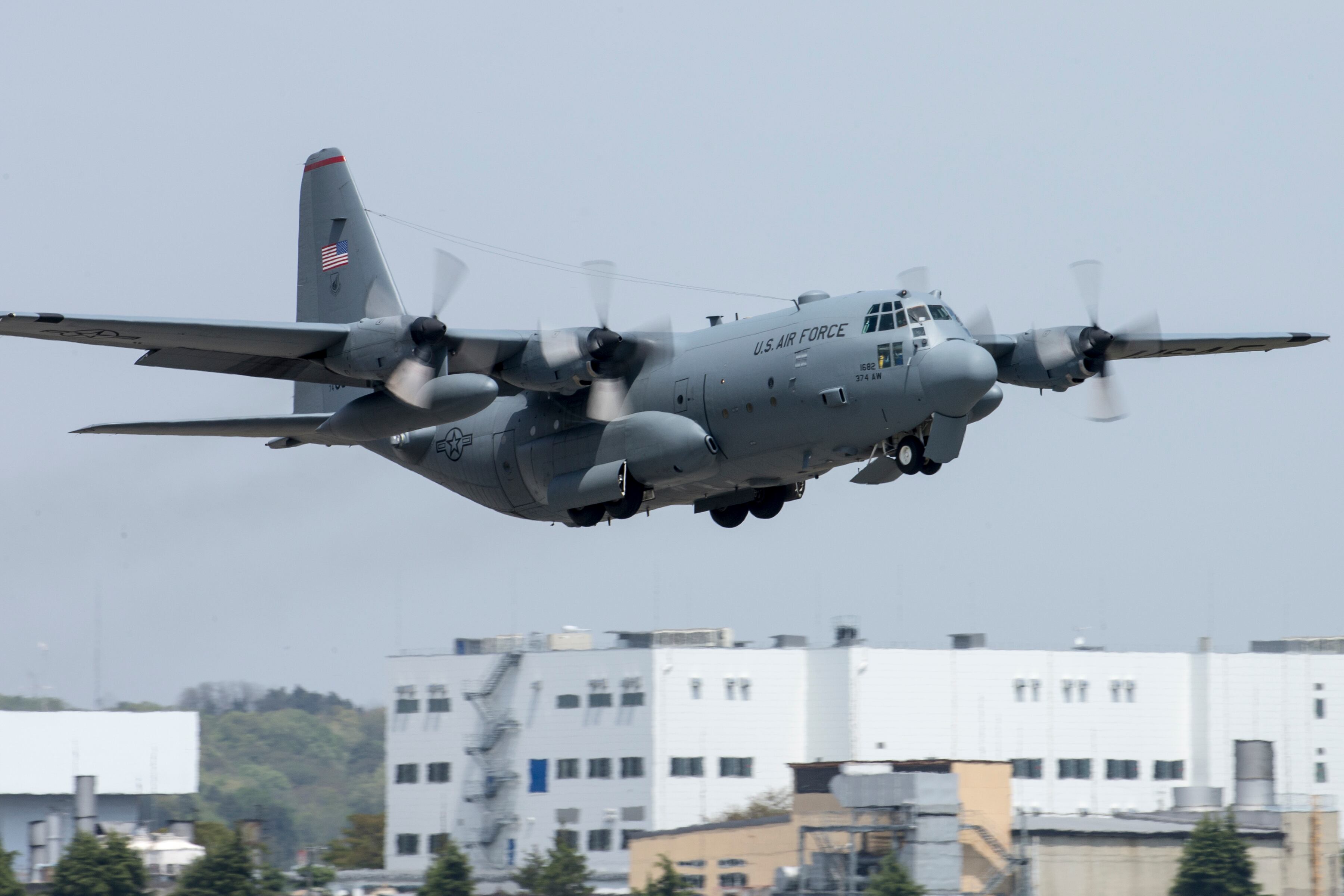
A C-130 Hercules takes off from Yokota Air Base, Japan, April 18, as part of the U.S. earthquake relief efforts.
Photo Credit: Osakabe Yasuo
Meanwhile, two Air Force C-130Hs have been flying heavy vehicles and personnel from a Japanese airbase to the area affected by the earthquake, a news release from the 374th Airlift Wing says. Each plane can carry up to 42,000 pounds of cargo.
"These missions are perfect examples of why we are located where we are and what we train for every day," Lt. Col. John Kerr, 36th Airlift Squadron director of operations, said in the news release. "Our airlifters are eager to show their support for their friends and neighbors in Japan following this tragedy."
Marines and airmen have participated in similar relief efforts in the past. from the wing have been here before. They delivered relief supplies after Japan’s devastating March 2011 earthquake and tsunami; they rescued thousands of people after Super Typhoon Haiyan decimated the Philippines in November 2013; and they braved the dangerous terrain as part of the response to May’s earthquake in Nepal.
"I would like to express my deepest condolences on behalf of the men and women of the 374th Airlift Wing," Col. Douglas DeLaMater, 374th Airlift Wing commander, said in the news release. "We will continue to support the relief efforts in Kumamoto in whatever way the government of Japan requests. This is a tragic event, but I am confident in the resolve of the people of Japan."